Big Changes Coming to ATAR Physics Units 3 & 4 in 2026
If you’re studying Physics in Year 12 from 2026, you’ll be part of the new ATAR Physics syllabus released by the School Curriculum and Standards Authority (SCSA).
What’s New
SCSA has refreshed the Physics course to make it more logical, relevant and hands-on. The new syllabus is organised around three strands:
- Science Inquiry Skills – a stronger focus on experiments, investigations and data analysis.
- Science as a Human Endeavour – exploring how physics connects to real-world challenges and innovations.
- Science Understanding – developing deeper conceptual knowledge of relative motion, wave-particle duality, electromagnetism and cosmology.
Updated Content
Some older topics have been removed or simplified. Light waves no longer mention reflection and refraction. The standard model has been removed completely.
Newer and more relevant content has been added. There’s a bigger emphasis on modern applications such as particle accelerators. General relativity makes an appearance, albeit a very small one.
Assessment Updates
Tests and examinations still form the backbone of the assessment weightings at 40% and 50% respectively. The new assessment type, the portfolio, is worth 10% of the year which requires teachers gather a body of experimental work from students across the year.
Why It Matters
If you’re starting Year 12 Physics in 2026, make sure your materials match the new syllabus (for teaching from January 2026). Avoid using old or second-hand textbooks based on outdated content — they won’t align with the updated course.
My Take
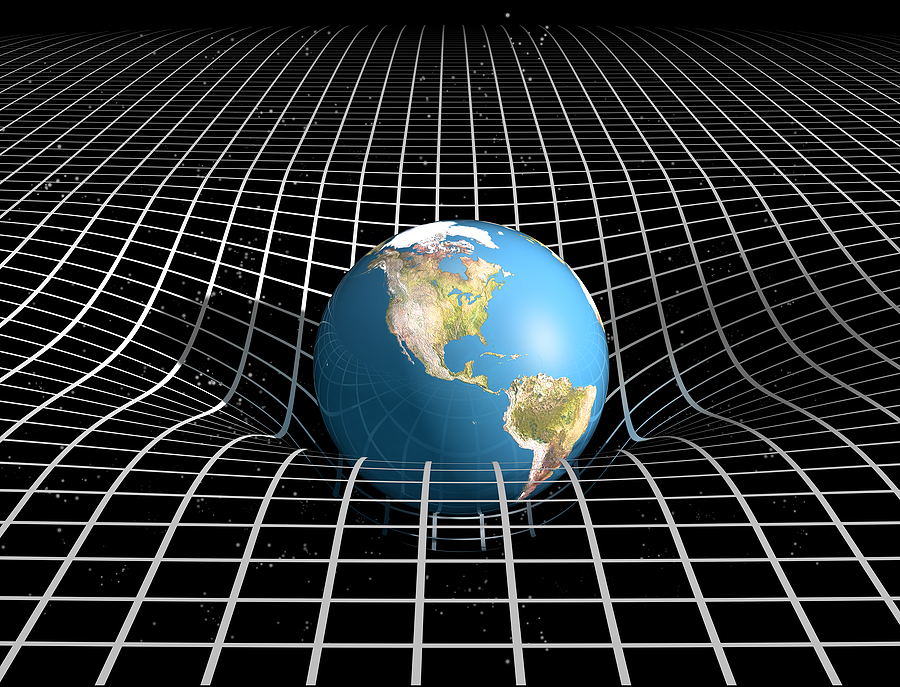
I was generally very positive about the Unit 1 and 2 changes in 2025. After having taught it to 70 classroom students and 10 tuition students this year, I am still happy with this syllabus. The Unit 3 and 4 changes do not excite me as much. The standard model provided excellent contexts in which to apply theory of special relativity; but as this has been removed, will rely more heavily on “thought” experiments of spaceships and trains moving at high speeds. Splitting the Theory of Special Relativity between sections in Unit 3 and Unit 4 seems odd as it is only a 2 weeks’ worth of content. Energy and momentum would have fit nicely at the end of Newtonian Motion along with time dilation and length contraction – perhaps the issue was it would be too early to include momentum of light in Unit 3. General relativity in Science as a Human Endeavour for the motion section is not supported by the concepts covered in the Science Understanding strand, unlike all other human endeavour applications. Lasers are supported by energy levels in wave-particle duality. Induction stove tops are supported by Faraday’s law in electromagnetism. Gravitational lensing is not supported by any theory in the course – making it extremely difficult to explain or investigate further beyond showing the classic ball deforming a plane example (featured image above).
I don’t like to be the person who grumbles over every change in their lives and these changes were put together by a committee of experienced Physics teachers and iterated on from feedback, so I’ll go in hoping it works out.